Resources
Not everything written about resilience matters to public finance. We curate the research, market developments, and expert perspectives that help governments, insurers, investors, and practitioners better understand how resilience becomes investable.

Governments Don't Need Another Risk Model. They Need a Usable One.
There are a lot of weather-focused models in the world right now. Even more so with the proliferation of AI. We figured governments needed a new approach that leverages probabilities.
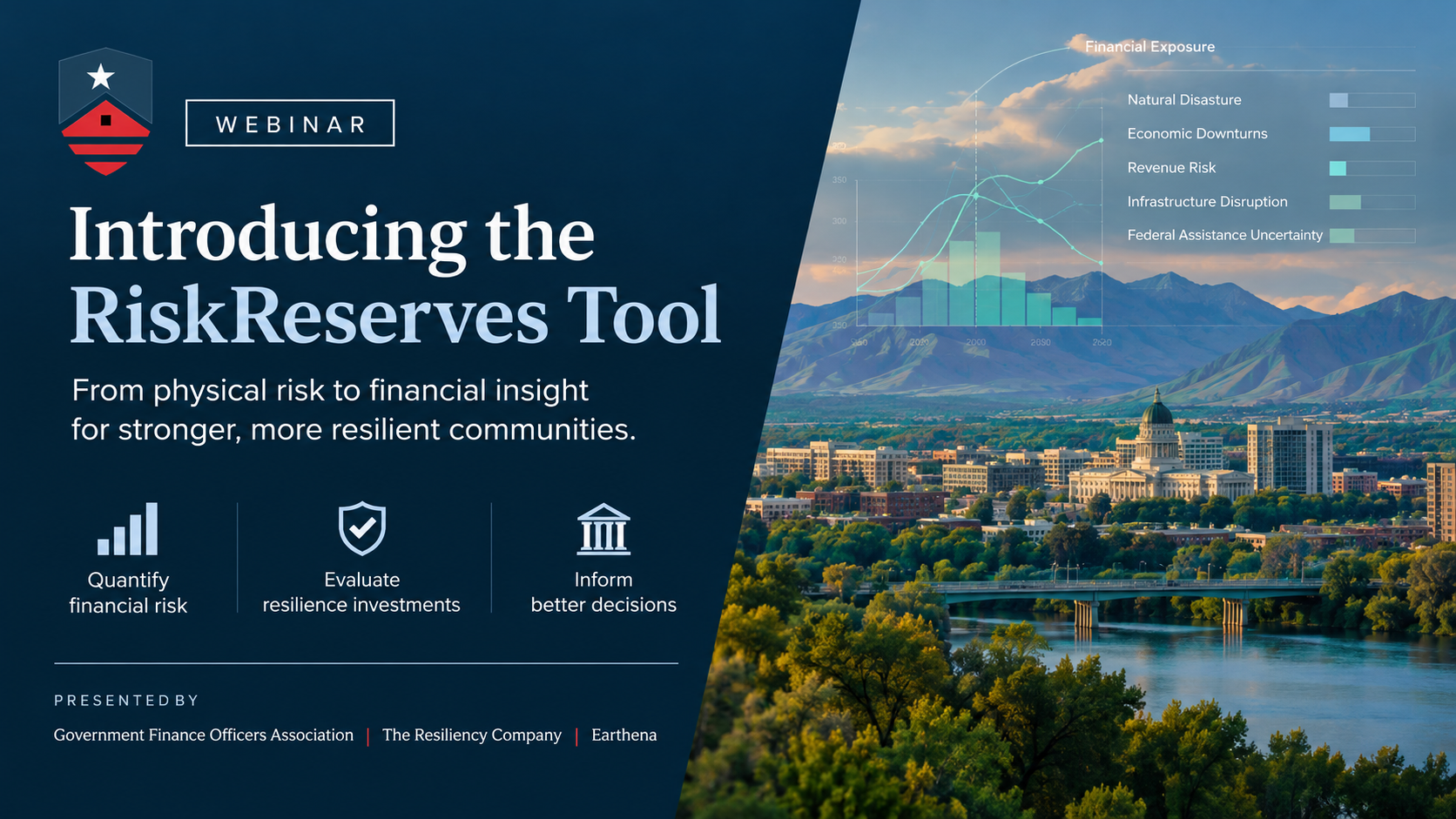
Beyond Government Reserves: What the Market Wants to Know About Quantifying Fiscal Risk
The first public webinar for the RiskReserves Tool came to life in the Q&A.
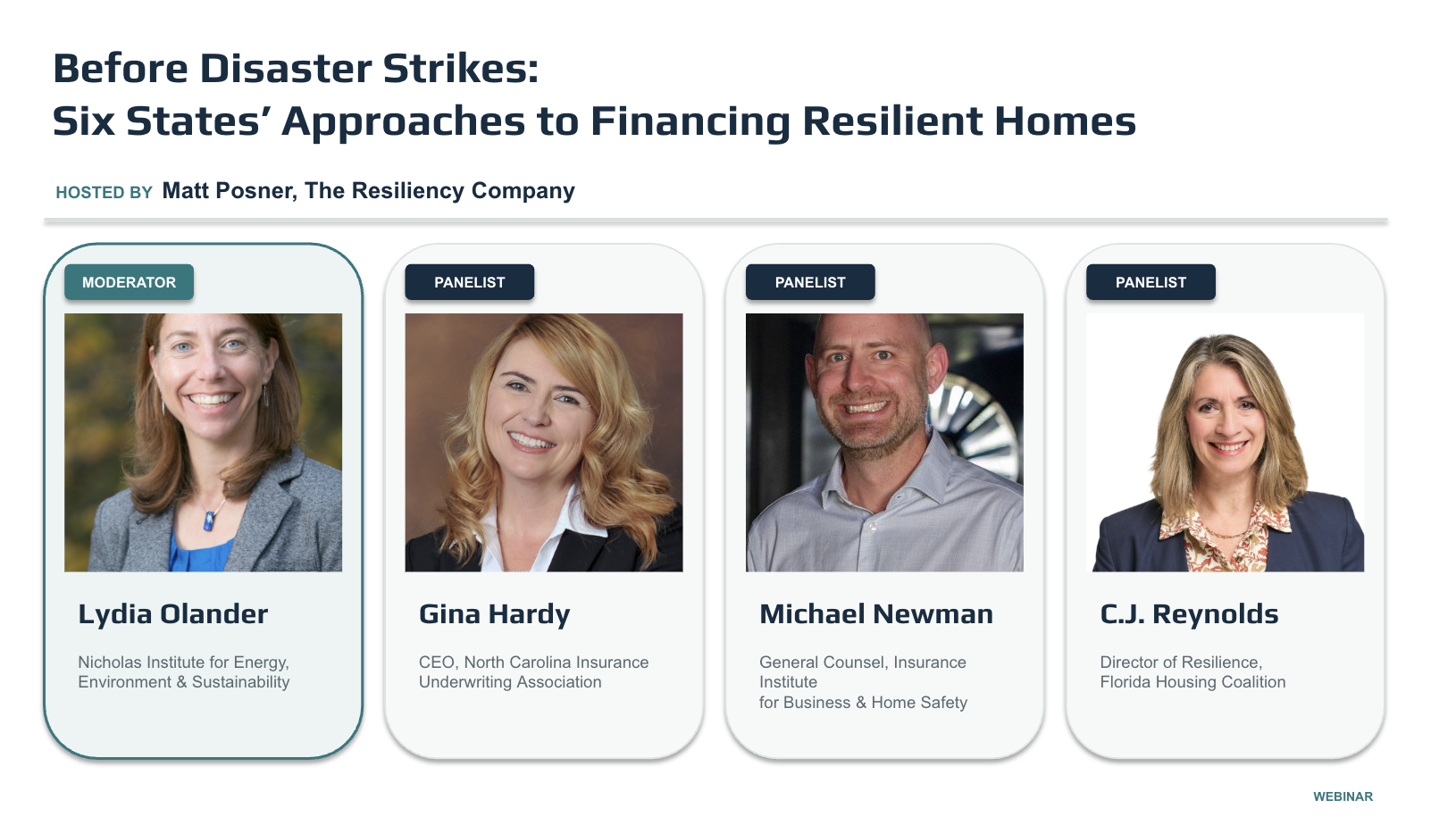
Webinar: How States Incentivize Property Resilience
The first webinar in the Resilient Home Lending series offered an overview of how states are incentivizing resilient at the property level.

The Resilience Industry Has a Government Problem. Here's What Climate Week Taught Me.
Climate Week this year was about simplicity.

Webinar Announcement: Before Disaster Strikes — Six States’ Approaches to Financing Resilient Homes
In the wake of the launch of six state case studies around policy and home hardening, we bring together experts to discuss the future of state's’ role in risk reduction.

Resilient America Summit Final Report
In the wake of over 100 public jurisdictions, finance professionals and climate nonprofits convening in Chicago this July, we published a full “take aways” report for those who were unable to attend and for those looking to keep the dialogue going.
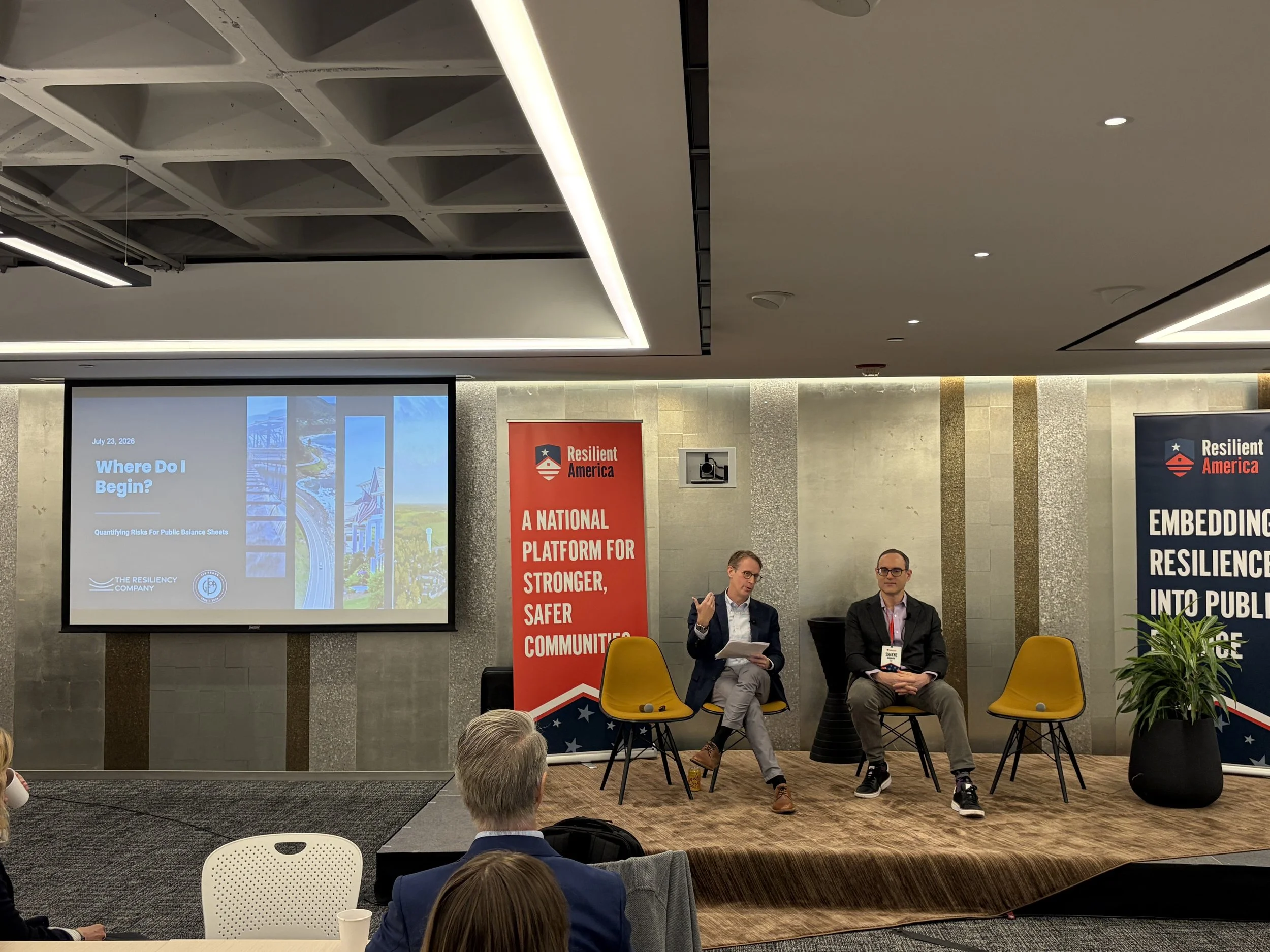
The First Resilient America Summit
On July 23 the Resiliency Company, Constructive, Urban Land Institute Impact Lab and the Government Finance Officers launched the inaugural Resilient America Summit: Embedding Resilience into Public Finance. Over 100 people attended, including 33 public jurisdictions, public finance bankers, insurers, utility providers and nonprofit resilience organizations

Making Resilience & Public Finance Function
State and local governments are quietly re-emerging as the most consequential actors in addressing the growing gap between risk and investment in communities across the United States

Before the Market Catches Up
In 2025, the Resiliency Co underwrote an independently authorized and reviewed article looking at the opportunity and the challenges for resilience and the municipal bond market.
Drawing on interviews with issuers, investors, rating agencies, insurers, and market experts, it examines why resilience remains underpriced—and what that means for communities, philanthropy, and investors.
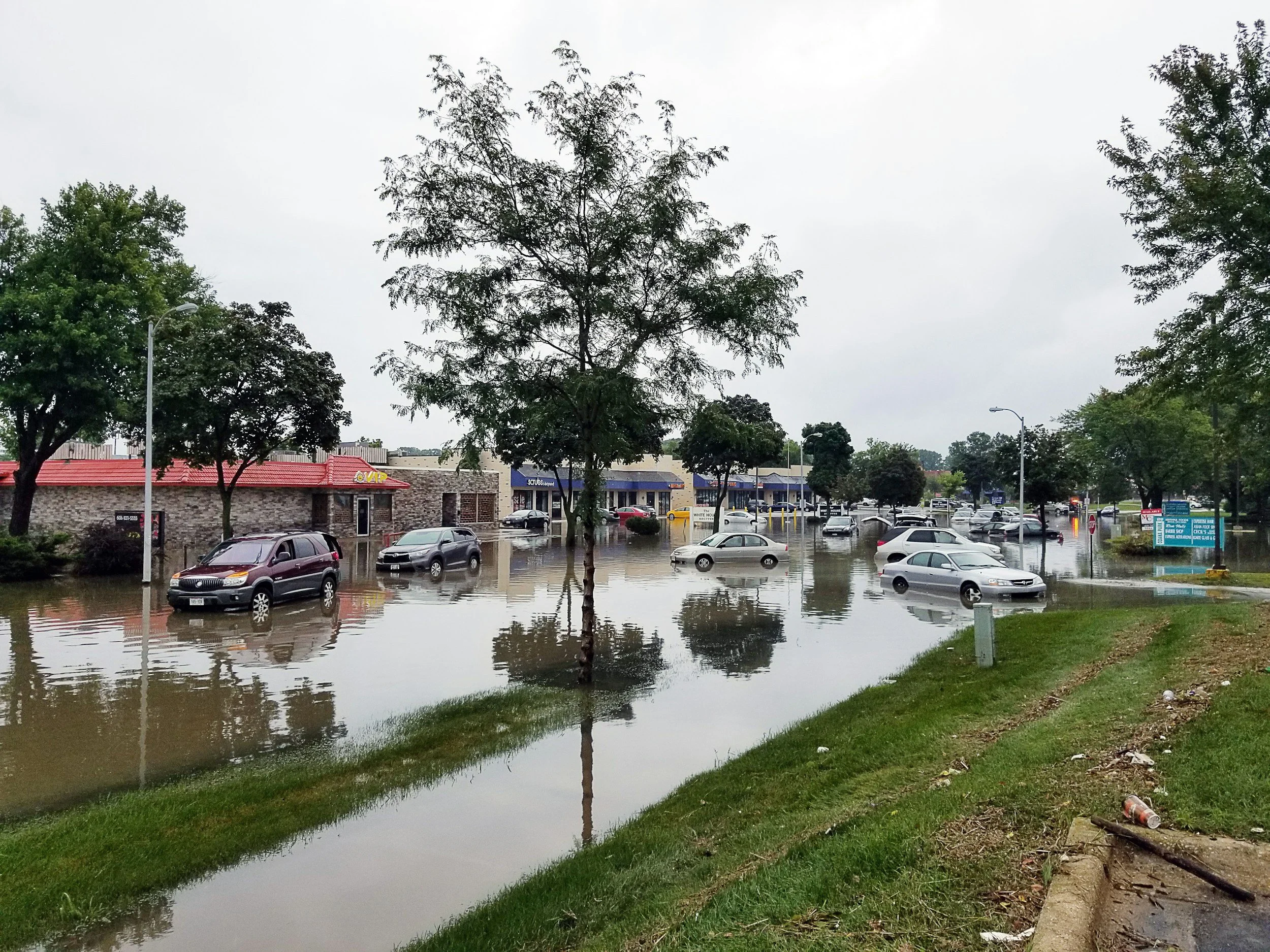
Rethinking our Assumptions and Financing Tools for Community Resilience in the Face of Growing Climate Loss and Risk
Traditional grants and municipal finance alone cannot meet the scale of today's resilience challenge. This Brookings report explores how state and local governments can unlock new investment by rethinking how risk, value, and public finance work together to build stronger, more resilient communities.

A Missing Ground: Why Municipal Bonds Have Struggled to Finance Climate Resilience at Scale
For years, resilience finance has oscillated between highly customized pilot projects and broad “green” bond programs that struggle to demonstrate measurable impact. The path to scale lies between those extremes by adapting proven municipal finance tools to value and finance risk reduction.

Rethinking Risk: Why Local Governments Can’t Shoulder Climate Burdens Alone
The majority of U.S. infrastructure is funded, built, and maintained by city councils, county boards, and state legislatures. But aging infrastructure, escalating climate risk, and other factors are converging to leave local communities less prepared to absorb their growing risk.