
Webinar Announcement: Before Disaster Strikes — Six States’ Approaches to Financing Resilient Homes
Friday, October 2, 12:00 pm eastern
Hosted by:


Moderator:
Lydia Olander, Duke University’s Nicholas Institute for Energy, Environment & Sustainability
Speakers:
Gina Hardy, North Carolina Insurance Underwriting Association and the North Carolina Joint Underwriting Association
Michael Newman, Insurance Institute for Business & Home Safety
CJ Reynolds, Florida Housing Coalition
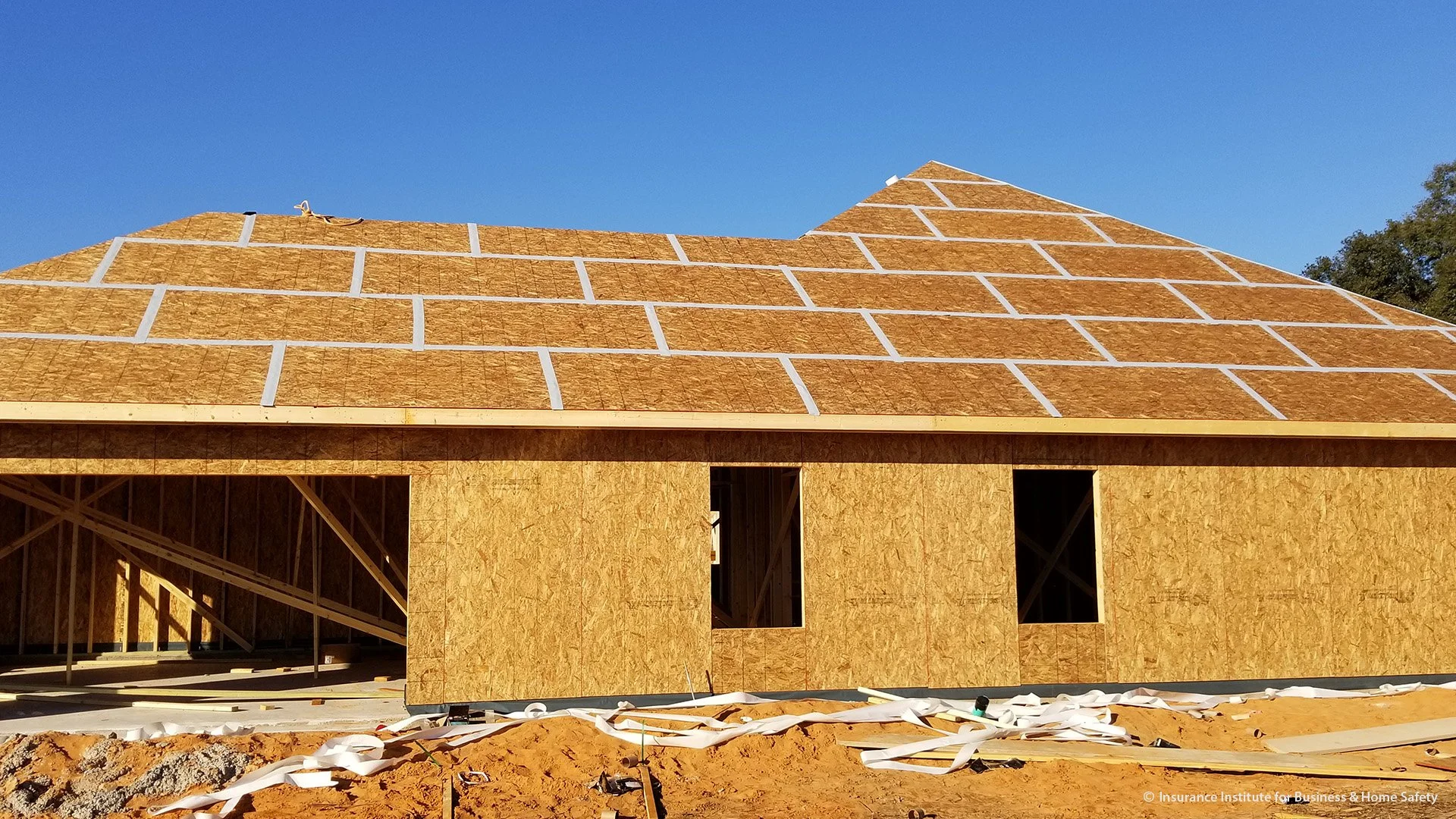
What if disaster resilience could be financed before a storm, wildfire, or other catastrophe—not primarily after the damage is done? Join experts for a webinar cohosted by the Resiliency Company and Duke University’s Nicholas Institute for Energy, Environment & Sustainability and exploring innovative approaches to funding property-level resilience investments, including IBHS FORTIFIED™ Roofs.
Panelists will discuss how state appropriations, insurance-sector funding, tax incentives, catastrophe bonds, and emerging blended-capital models are helping move resilience investment upstream. The conversation will highlight practical lessons for policymakers, insurance regulators, housing finance agencies, philanthropies, and others working to reduce disaster losses, strengthen insurance markets, protect public resources, and make resilient homes more affordable and accessible.
Case studies of resilient roof funding and financing programs from six state states—and a policy brief surfacing common features—will be published here on Monday, August 31 at 11 a.m. ET.
Speaker Information:
Lydia Olander, Program Director, Nicholas Institute for Energy, Environment & Sustainability
Lydia is a program director at the Nicholas Institute for Energy, Environment & Sustainability at Duke University and adjunct associate professor at the Nicholas School of the Environment. She works on improving evidence-based policy and accelerating implementation of climate resilience policy, nature-based solutions, natural capital accounting, and environmental markets. She leads the Nature Activation Hub at Duke, hosts the National Ecosystem Services Partnership, is Co-Site Director for The Center for Innovation in Risk, Catastrophes, and Decisions (CIRCAD), and sits on Duke’s Climate Commitment action team
Gina Hardy, Chief Executive Officer, North Carolina Insurance Underwriting Association and the North Carolina Joint Underwriting Association
Gina is Chief Executive Officer of the North Carolina Joint Underwriting Association and the North Carolina Insurance Underwriting Association. Together, these nonprofit Associations insure approximately $245 billion in property exposure across nearly 600,000 risks in North Carolina and are nationally recognized for promoting construction standards that exceed minimum building-code requirements.
Under Hardy's leadership, the Associations have committed more than $217 million to four residential pre-disaster mitigation programs that help homeowners strengthen their roofs and reduce vulnerability to storm damage.
Hardy has also co-authored three published academic papers related to insurance, hurricane risk, and resilience.
Hardy was named one of Insurance Business America's Elite Women in Insurance in 2021. In 2022, Governor Roy Cooper awarded her the Order of the Long Leaf Pine for distinguished service to North Carolina.
The Associations received Insurance Insider's international Initiative of the Year award for Cape Lookout Re Ltd., the first insurance-linked securities transaction structured as a resilience bond.
Hardy serves on the boards of the Insurance Institute for Business & Home Safety and the Property Insurance Plans Service Office. She also serves on several advisory boards supporting insurance programs across North Carolina.

Michael Newman, Managing Director, Partnerships & General Counsel, Insurance Institute for Business & Home Safety.
Michael joined the Insurance Institute for Business & Home Safety (IBHS) in 2020 with nearly 15 years of experience in law and public policy. Convinced that the damage, disruption, and dislocation all too often associated with natural disasters can be reduced or even prevented, Michael works with a team of scientists and risk communicators that deliver strategies to build safer and stronger homes and businesses. IBHS’s real-world impact enables the insurance industry and affected property owners to prevent avoidable losses.

CJ Reynolds, Director, Resilience and Recovery, Florida Housing Coalition
CJ brings more than 30 years of experience in strategic program management, technical training, and stakeholder engagement. Since 2009, she has focused on advancing community and housing resilience across Florida by strengthening local, regional, and state recovery and adaptation planning to reduce risks from extreme heat, high winds, and flooding.
CJ specializes in building collaborative partnerships among industry associations, government agencies, universities, and private-sector organizations to develop innovative programs, data-driven tools, and practical resources that support builders, developers, housing professionals, and local decision-makers.
Since joining the Coalition in 2022, CJ has led the development of new resources and training programs focused on rapid recovery and resilient design, alternative construction methods, above-code building practices, residential solar and extreme heat mitigation. These initiatives provide architects, builders, developers, and local governments with the knowledge and technical tools needed to strengthen their programs to improve insurability, energy savings, and reduce long-term risk.
Prior to joining the Florida Housing Coalition, CJ served as Director of Resiliency and Engagement at the Tampa Bay Regional Planning Council, where she led the 32-member Regional Resilience Coalition and coordinated resilience planning across the region. She also spearheaded the JPMorgan Chase-funded REACH initiative, which aligned affordable housing and resilience objectives within local planning efforts. From 2010 to 2018, she worked at the University of South Florida College of Marine Science supporting climate change research and stakeholder engagement initiatives focused on community impacts, adaptation strategies, and policy and organizational barriers.