Webinar: How States Incentivize Property Resilience
In the first of our resilient home lending webinar series, we led with the big picture amplified by leaders in Florida and North Carolina.
You can watch the full webinar here.
Stronger Homes, Smarter Financing: What Six States Are Teaching Us About Resilience
How states are turning insurance savings, public investment, and affordable lending into a market for stronger homes.
Every year, Americans spend billions repairing and rebuilding homes damaged by hurricanes, flooding, severe storms, and other natural hazards. Yet we continue to struggle with a seemingly straightforward proposition: investing in stronger homes before disaster strikes costs less than repeatedly rebuilding them afterward.
The problem is not a lack of technology or engineering standards. We know how to build homes that better withstand extreme weather. The challenge is developing financial systems that make those improvements affordable, accessible, and attractive to homeowners.
That question motivated a research collaboration between The Resiliency Company and Duke University's Nicholas Institute for Energy, Environment & Sustainability. Our recently released Scaling FORTIFIED Roof Adoption project examines six state-level approaches to financing stronger homes, including programs in Alabama, Florida, Louisiana, North Carolina, Oklahoma, and an unnamed Midwestern state.
We recently convened a discussion with leaders from the insurance, housing, and resilience sectors to explore what these examples reveal about scaling investment.
What emerged was an important lesson: Successful resilience programs are not simply grant programs. They are markets being built around a shared financial interest in reducing risk.
The Standard That Makes Financing Possible
Before financing can scale, lenders, insurers, governments, and homeowners need confidence that an investment actually reduces risk.
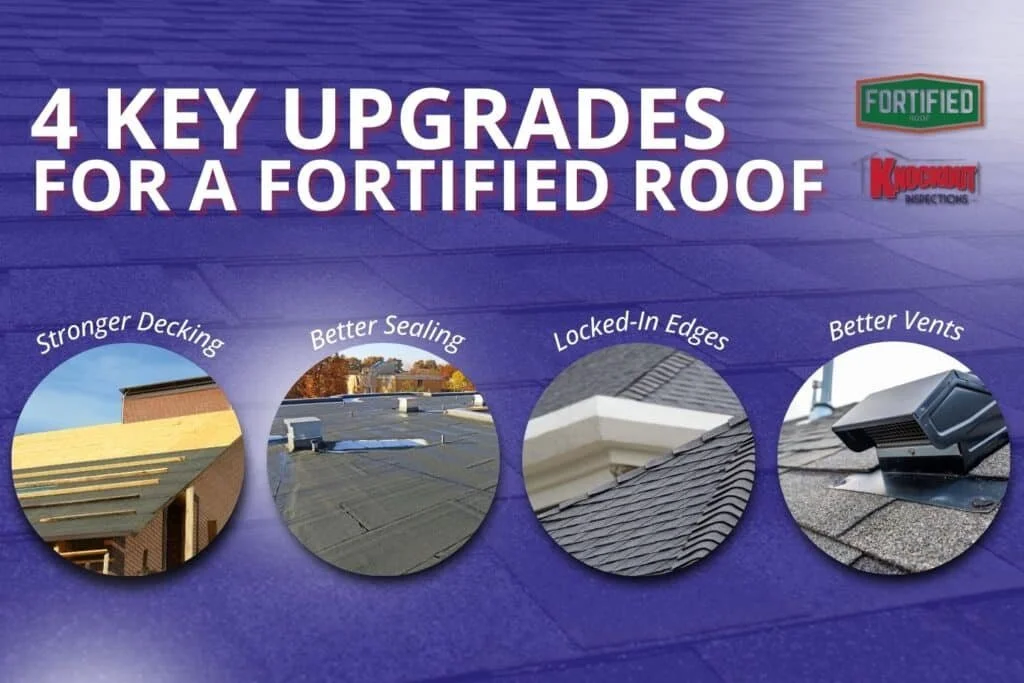
Michael Newman of the Insurance Institute for Business & Home Safety (IBHS) explained how its FORTIFIED standard addresses that challenge. FORTIFIED establishes engineering requirements for stronger roofs and buildings, accompanied by independent verification that the work meets those requirements.
The results are compelling. Research examining Hurricane Sally's impact in Alabama found that FORTIFIED homes were more than 70% less likely to experience an insurance claim, with claims approximately 20% less severe when they occurred.
Newman emphasized that verification matters as much as the standard itself. Homes with FORTIFIED designations performed substantially better than homes built to comparable requirements without the independent verification process.
This distinction has enormous implications for financing. A standardized, independently verified improvement gives insurers a credible basis for recognizing reduced risk and lenders a consistent product they can finance.
It also helps explain why FORTIFIED has grown from fewer than 10,000 designations roughly six years ago to more than 100,000 nationwide.
North Carolina: When Insurers Become Resilience Investors
Perhaps the most innovative financing model comes from North Carolina, where the state's residual insurance market has transformed mitigation into a core financial strategy.
Gina Hardy, CEO of the North Carolina Insurance Underwriting Association and Joint Underwriting Association, described how her organizations initially relied on insurance premium discounts to encourage homeowners to install FORTIFIED roofs.
Among more than 600,000 policyholders, just four responded.
That experience prompted a fundamental shift. Rather than waiting for homeowners to respond to discounts, the associations began directly financing stronger roofs.
The business case was straightforward: fewer damaged homes mean fewer insurance claims and potentially lower reinsurance costs.
The associations have since invested more than $150 million from their own surplus into mitigation programs. Hardy described how they are also incorporating mitigation funding into their catastrophe bonds and reinsurance arrangements, with $8.4 million expected to return through those structures next year.
The program has grown from four FORTIFIED roofs to more than 25,000, including approximately 16% of homes across the Outer Banks and barrier islands.
But North Carolina is moving beyond grants. Working with the Clean Energy Fund of the Carolinas, the associations are developing affordable loans to cover costs that grants cannot. Support from the Robert Wood Johnson Foundation can further assist lower-income households.
This approach, explored in the research project's North Carolina case study, demonstrates how insurers can become active investors in reducing the risks they insure.
It also illustrates the value of combining grants, affordable credit, and insurance-sector capital rather than expecting any one mechanism to finance an entire improvement.
Florida: Making Resilience Part of Housing Finance
Florida offers a different lesson: resilience financing becomes more effective when it is integrated into existing housing institutions.
C.J. Reynolds, director of resilience and disaster recovery at the Florida Housing Coalition, described how Florida has developed an ecosystem involving building codes, wind mitigation inspections, insurance credits, state grants, and affordable housing programs.
The state's My Safe Florida Home program is particularly instructive. Initially, matching requirements and reimbursement structures created barriers for households unable to afford improvements upfront.
The program evolved to better serve lower-income homeowners, including arrangements where approved contractors receive payment directly rather than requiring homeowners to finance the work and await reimbursement.
Reynolds emphasized that affordability must be central to program design. For households with limited savings, even modest upfront contributions can prevent participation.
The Florida Housing Coalition is also working with affordable housing developers to integrate stronger construction standards into projects before financing and design decisions are finalized.
Its Green and Resilient Development Accelerator helps developers evaluate construction costs, site selection, building standards, and potential insurance benefits.
The objective is to make resilience a routine consideration in affordable housing finance rather than an expensive addition after development decisions have been made.
Florida's experience underscores another challenge: even when better construction reduces physical risk, the insurance market does not always immediately recognize or reward those improvements.
Closing that gap requires better documentation, stronger relationships with insurers, and more consistent recognition of verified mitigation.
Public Investment Can Create Private Markets
One of the most encouraging findings from the discussion concerned what happens after governments begin investing.
Newman pointed to Alabama, where state-supported FORTIFIED grants helped create demand for trained contractors, certified evaluators, and stronger roofing products.
As contractors developed expertise, they began marketing FORTIFIED roofs to homeowners who were not receiving grants.
Today, according to Newman, more than 80% of Alabama's FORTIFIED designations come from the private market rather than state grant recipients.
That is a remarkable outcome.
The public investment did more than improve the homes directly receiving assistance. It helped establish a workforce, consumer awareness, and a commercial market that continues to generate investments beyond the original subsidies.
North Carolina has experienced something similar. Hardy described how the program initially struggled with a shortage of qualified evaluators and contractors. Today, roofing companies advertise FORTIFIED construction throughout coastal communities.
This is an important distinction for policymakers evaluating the return on public investment. The value of a grant program should not be measured exclusively by the number of homes it directly improves, but also by the private investment and market capacity it helps generate.
From Individual Programs to a National Financing Market
The broader lesson from these state experiences is that resilient home financing does not depend on discovering one perfect funding source.
It depends on aligning the institutions that benefit from stronger homes.
Insurers benefit from fewer claims. Lenders benefit when borrowers and collateral are less vulnerable to disaster. Governments benefit from more stable neighborhoods and reduced recovery demands. Homeowners benefit from safer properties, potentially lower insurance costs, and fewer disruptions to their lives.
Each has a reason to participate, but their incentives do not automatically translate into coordinated investment.
That is where public policy, philanthropic capital, and community financial institutions can play catalytic roles.
State grants can establish demand. Insurance mechanisms can reward verified mitigation. Community development financial institutions and credit unions can provide affordable loans. Philanthropy can help absorb financing risks or support households that cannot afford conventional credit.
The opportunity is to connect these components into repeatable financing arrangements that make stronger homes an ordinary part of housing investment.
The six state case studies offer a starting point, not a finished national blueprint. Their approaches differ because their institutions, insurance markets, housing conditions, and financial capacities differ.
But the central lesson is consistent: Resilience financing scales when we stop treating each stronger home as an isolated project and start building the financial infrastructure that makes stronger construction the normal choice.
We already know how to build safer homes. The next challenge is making it easier to pay for them before disaster strikes.